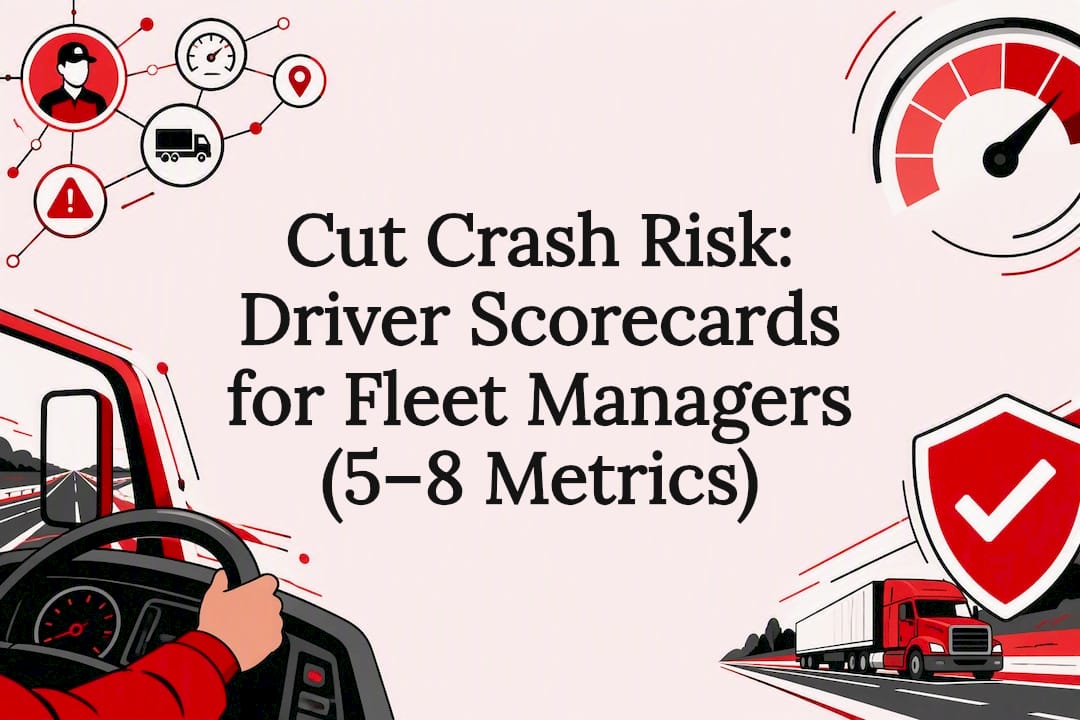
Cut Crash Risk: Driver Scorecards for Fleet Managers (5–8 Metrics)
A driver scorecard turns telematics, dashcam footage, ELD logs, and inspection records into a readable profile of how safely and efficiently a driver operates. The point is not the score itself. It is spotting risky behaviors early enough to coach them before they become a collision, a claim, or a compliance violation.
What a Driver Scorecard Actually Shows You
A useful scorecard shows behavior categories, trends, and enough context to know what to do next. Fleets use that breakdown to triage drivers who need attention, prioritize coaching, document safety activity for insurers and auditors, and recognize strong performance. A score alone is difficult to coach; a behavior-level trend gives a manager something specific to discuss.
The Metrics That Actually Belong on a Scorecard
Keep the core list focused. Safety metrics can include speeding exposure, harsh braking and acceleration, following distance, distraction events, and seat-belt compliance. Compliance metrics can include HOS exceptions, inspection completion, and current licensing or certification status. Efficiency metrics can include fuel consumption, idling, and route adherence.
Report events as rates per 1,000 miles or per hundred hours driven rather than raw counts. Segment the rates by route type as well: dense urban delivery work naturally produces different braking patterns than interstate line-haul.
Where the Data Comes From and How Raw Signals Become a Score
Typical inputs include telematics, ELD records, video telematics or in-cab cameras, DOT inspection records, and claims history when available. Video context can help a manager verify what happened before treating an event as reckless driving.
- Detection — flag an event against a defined threshold.
- Normalization — adjust for distance, route type, and vehicle class.
- Weighting — assign relative importance based on safety priority.
- Aggregation — roll metrics into category and composite scores.
- Trend windowing — compare rolling periods so one bad week is not treated as a long-term pattern.
Weighting, Leading Indicators, and Fair Benchmarking
Cap the scorecard at roughly five to eight core measures. Weight safety and compliance above efficiency, combine leading indicators such as harsh-braking frequency with lagging indicators such as collision history, and benchmark within comparable route and vehicle groups. The goal is to measure behavior rather than simply measure the assignment a driver happened to receive.
Rolling Out Scorecards Without Losing Driver Trust
Start with a pilot period before formal scoring. Publish metric definitions, scoring windows, and weighting rules in plain language. Create a dispute and resolution workflow before launch, establish a regular coaching rhythm, and recognize improvement instead of treating every flag as punishment.
Proving the Program Works
Track leading indicators such as repeat risky behaviors alongside lagging outcomes such as collision rate and claims severity. For each coaching intervention, record the pre-session event rate and the 30-day post-session rate, and keep compliance trends and dispute records with the same driver history.
Running Scorecards Inside One Platform Instead of Five
The operational friction often comes from stitching together telematics, an ELD portal, spreadsheets, and compliance folders. A TMS that centralizes driver profiles, telematics feeds, coaching records, and compliance documents can keep the scorecard flag and the driver's broader history in the same record.
Privacy and Data Security in Driver Monitoring
Driver monitoring can include location history, video, speed patterns, and other sensitive information. Limit access to people who need it, define retention periods, tell drivers what is collected and who can see it, and understand how vendors store and use the data. A clear retention and access policy reduces unnecessary exposure.
Industry Standards and Regulatory Pressure Shaping Scorecards
Internal scorecards often track behaviors that also matter to federal safety and compliance programs, including unsafe driving and hours-of-service compliance. Aligning internal definitions with the carrier's regulatory obligations can make it easier to identify problems before an audit or roadside inspection.
How Scorecards Shape Insurance Rates and Liability Exposure
A documented scorecard program can become part of the fleet's safety record. Tracking declining event rates, documented coaching, metric definitions, and measurable improvement gives management concrete evidence of an active risk-management process. When a collision occurs, the historical record may also become part of the documentation reviewed during a claim or dispute.
What I'd Prioritize First If I Were Building This From Scratch
Explainability matters more than catching every marginal event. Pick a small set of behaviors a driver can actually change, pilot the process openly, calibrate it against real route conditions, and make sure managers can explain a flag in one sentence.
— Rigmatix
Run Your Scorecard Program Inside One System, Not Four
When driver monitoring, coaching records, compliance tracking, dispatch context, and settlements share one system, a flagged event can move into action without exporting information between multiple tools. That shortens the gap between finding a risky pattern and addressing it.
FAQ
What Is a Good Driving Score for a Driver?
Higher scores generally reflect lower rates of harsh braking, speeding, and following-distance violations, but a score should be examined alongside its underlying behavior data and route context before drawing conclusions.
Is 75 a Bad Driving Score?
A moderate score calls for a closer look at the underlying events and whether route type or vehicle class is influencing the number. The behavior breakdown matters more than the headline score.
Is a Driving Score of 92 Good?
A high score generally reflects low event frequency and strong compliance history, but sustained trends are more useful than a single weekly snapshot.
What Are Some Good Driver Assessment Tools?
The source article emphasizes tools that combine telematics, video context, and ELD data so managers can verify events and connect driver behavior to compliance and operational records.